Wednesday, November 16, 2011

Adolescents, Hamsters and Sex.


  I learn something new about our bodies each day! For instance, today I discovered that our human physiology is quite similar to that of a Hamster: this interesting fact surfaced when reading a stimulating article which raises the possibility that, for young male Hamsters at least, sex during adolescence can have a lasting negative effect on the body and mood well into adulthood.

It is now becoming more clear that the developing brain remains “plastic” well into the third decade of life, and so it can be vulnerable to permanent changes as a result of negative impacts during this time. That sex can be seen to be negative may seem odd to many people who think that sex sells everything, but there is no doubt that it can be a very complex emotional and physical event in the life of an individual when their nervous system is in a state of continuing evolution.

But is appears that adolescent sex in our furry friends can have the following effects:

  • Increased signs of depressive like behaviors
  • Lower body mass
  • Smaller reproductive tissue
  • Changes to cells in the brain

This would appear to suggest that for some sexually active “teenage” Hamsters, sex can be a serious stressor. 

Whilst there is a real temptation to smile at the extrapolation of teenage Hamster sex to adolescent humans having sex, there is a serious side to the findings. The teenage years are a time when the nervous system is developing and changing very rapidly and “There is a possibility that environmental experiences and signals could have amplified effects if they occur before the nervous system has settled down into adulthood”, according to co-author Zachary Weil of Ohio State’s Department of Neuroscience in a paper delivered to the November meeting of the Society for Neuroscience.

Definitely food for thought.

Source
image
Ampersands & angle brackets need to be encoded.

Tuesday, November 15, 2011

Another plaudit for Pomegranates


It doesn't seem all that long ago that I was having a long lunch one Sunday with a delightful ex airline pilot who was extolling the benefits of Pomegranate juice. He was telling me that it had great benefits for older men faced with prostate dis-ease! Since then I have discovered that the experts also tell us that it helps with lowering blood pressure and is "anti-aging" (whatever that might mean!)

Well, now there's another benefit from this ruby juice that originally hails from the hills of Afghanistan.According to Batya Kristal, MD, MHA, from the Nephrology Department at the Western Galilee Hospital in Nahariya, Israel, patients in her renal unit who were given the juice over a one year period experienced lower blood pressure, an improved lipid profile and required less anti-hypertensive medication!

Obviously with reports like this one does have to look behind the genuine enthusiasm of the researchers, and in this case the study was small and the results would only apply to patients with severe kidney problems. Also, Pomegranate juice is high in potassium, a salt that tends to accumulate in kidney disease and if not monitored closely could lead to serious consequences.

But it is reassuring to note that the juice did lower blood pressure in people who have naturally higher blood pressures because of their kidney problems. Also, when looking at how the "Lipid profile" was affected, it seems that not only did the bad Cholesterol go down, but the good HDL Cholesterol went up: and there are few safe things that I know of that can raise the good, cardio-protective HDL Cholesterol.

So as well as flossing my teeth for good gum hygiene, taking regular effective physical activity, eating lots of salmon, veggies and fruit, but avoiding animal fat whenever I can, I will be adding 100mls of Pomegranate juice to my daily regime: perhaps it will help wash down the handful of walnuts that I have with my brekky!!

resource
Ampersands & angle brackets need to be encoded.

Monday, November 14, 2011

More bad news for Marijuana


For many years the proponents of Marijuana have said that it is essentially a “safe” recreational drug. Sadly, nothing could be further from the truth! In fact, even all currently so-called legal mood altering substances, from caffeine to alcohol, can have serious health implications.

Putting another nail in the coffin of the marijuana myth is a report in the November issue of the British Journal of Psychiatry with lead author Killian Welch saying “"It is now accepted by most psychiatrists that smoking cannabis increases an individual's risk of psychosis, and more specifically schizophrenia." But his findings go a step further and state “People with a family history of schizophrenia are particularly vulnerable to the psychotomimetic effects of the drug, and are likely at particular elevated risk of developing schizophrenia if they use cannabis."

For many young people however, a significant proportion of them would be ignorant of the fact that they had a “family history” of schizophrenia, and with the prevalence of the drug socially, may be tempted to use it. Sadly, early “experimentation” with such drugs could lead to a lifetime of mental health problems with all the emotional and social burdens that they entail.

Dr Welch study was unique in that it also found that those with a family history of schizophrenia and who used marijuana had a demonstrable reduction in size of the Thalamus, a key area of the brain, responsible for information processing: or as one headline shouted:

SMOKING POT SHRINKS THE BRAIN

I think the simple message is that nothing illegal is likely to be good for you when it comes to mood altering medications, and even if it is legal, you still need to be extremely cautious about using them.

Source:
Image:
Ampersands & angle brackets need to be encoded.

Thursday, November 10, 2011

Alcohol and sleep disturbance


One of my happy memories as in Intern is the ward Sister on one of the wards where I worked. In those days of open Nightingale wards with 10 patients down each side and Sister very much in charge of everything, "Frankie" ruled supreme!

One of her great delights was hidden in the linen cupboard. Here amongst the sheets and pillow slips were to be found two large Winchester bottles containing hospital grade brandy! What she did was to get the Interns to order a "wee dram" of Brandy for all the elderly ladies on the ward - and that meant 90% of the patients - which was duly administered in a cup of warm milk .... minus about 5mls of the prescribed "dose". Over a period of months she managed to fill two Winchesters that she kept for the Staff Christmas party, which was always a roaring success!!

Since then I've always been under the impression that a small drop of spirits was the least offensive form of night sedation for the elderly: but sadly recent research may be proving me wrong. What the researcher found was that sleep quality ratings were worse for those drinking alcohol compared with those who received a placebo drink in the trial. And women who drank alcohol suffered more sleep disruption than their male tipplers!

The only thing that I can say about the study was that the researchers got their subjects to drink until intoxicated, something any self respecting senior would reject with great indignity! In fact the study reinforces the serious downsides of drinking outside ones safe individual limit -as a rule of thumb that means one to two standard drinks for a woman and two to three for a man, allowing for size variations, medications, illnesses etc -.

What I'm looking forward to is the result of a trial where those with mild sleep disturbances are enrolled and one group gets the "Hot Toddy" and the other gets the Warm Milk: anyone interested?

image
Ampersands & angle brackets need to be encoded.

Monday, November 7, 2011

CPR- the Bee Gees and Nellie the Elephant!


I've booked myself in for a refresher in CPR this week which is a skill that I think everyone over the age of 16 should have. I must admit to having a vested interest, having already needed coronary stents and then a double bye-pass before the age of 60 - and I live a healthy life! The experts tell us that for those who have a heart attack away from a hospital, the earlier CPR starts the more likely that the patient will eventually leave hospital.

But CPR isn't just jumping on someone who's collapsed and starting to heave up and down on their chest. It is critical that if it is to be effective then the rate must be correct and the depth of compression must be consistent and effective too if it is to do any good.

For some time music has been thought to be a great adjunct in getting the timing right, but should you chose "Staying' Alive" by the Bee Gees, or if you're from the UK, then "Nellie the Elephant" seems to be the ditty of choice!

Unfortunately, the experts now tell us that whilst the music might help keep you in time, it doesn't help with the correct depth of compression, so it's back to the drawing board - or should I say, the studio!
image
Ampersands & angle brackets need to be encoded.

Friday, November 4, 2011

Dry skin.

I've just come in from doing some work in the garden, taken off my gloves, washed my hands and now my skin feels as dry as sticks!! 


One of the age old challenges that we humans have faced is how to preserve our skin in a prisitin condition. Companies have founded fortunes and dystanies on making and promoting various skin care products: each year women and increasingly men, spend billions of dollars worldwide in an attempt to keep their skin "soft and smooth" -but as the poet said: "It ain't easy"!

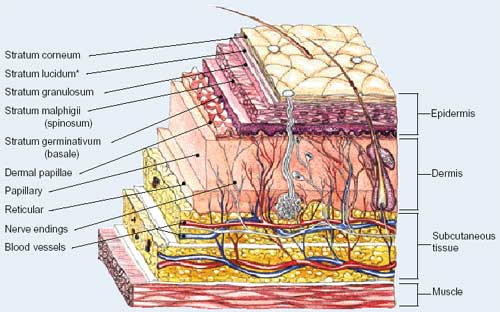
From the picture above you can see how complicated the whole "skin thing" is, and to imagine that a simple cream could fix all the problems that the skin has to deal with would be stretching ones imagination to the limits. 

The top layer of the skin is composed of dead cells and these are the only ones that we can directly affect: and in that respect it's a bit like "waking the dead"! The idea of moisturizing cream is to deliver water to those dead cells and trap it there so that they can rehydrate and swell, thus reducing the "fissuring" and cracking that can occur in dry conditions. Many moisturizers contain perfumes (in order to value add them -for that read, it makes them more expensive!) The problem with that is that some people are allergic to perfumes which can make "dermatitis" sufferers for instance, worse off than they were before. So in my book, the best "bang for your buck" is a simple combination of Sorbolene and 10% Glycerine: this is a good basic cream and eminently effective.

The problem we also face as we age is the loss of collagen in the lower parts of the skin. This leads to loose skin and wrinkles, and boy would I love to find an answer for that! And when it comes to loose thinning skin, one of the fashion trends of today that worries me when today's youth become the older generation of tomorrow, is the explosion of tattoos, or body art. They may look cute on healthy young skin, but believe me, in 20 or 30 years time when they begin to sag, it's not going to be a pretty picture.

So protect your skin as much as you can: use sunblock to stop the ultraviolet light damaging your dermal collagen: avoid soap where possible as that is very drying and use plenty of moisturizer. It's not the secret of eternal youth, but it will help!

If you have any special tips though that work for you - please feel free to share them: I'm all ears!

 
Ampersands & angle brackets need to be encoded.

Wednesday, November 2, 2011

The magic of Mozart

Its called the Mozart Effect and now it's been found to help Colonoscopists become more efficient at detecting precancerous adenomata in the bowel.

But first the Mozart effect. This refers to a set of research results that found listening to Mozart's music may result in significant short-term improvement in spatial temporal reasoning - in other words you operate better and become more efficient in what you do!

Colonoscopists are those medical experts who spend their lives peering into the part of the body that the rest of us try to forget about: the bowel, or as the experts call it, the Colon.

An Adenoma is a small lesion that can grow in the wall of the colon and in some cases can lead on to becoming a cancer. In fact the more you have, the greater the chance that one of them will "turn" into a cancer.

A new study unveiled at the American College of Gastroenterology's (ACG) 76th Annual Scientific meeting in Washington found that adenoma detection rate increased from baseline values with music compared to without music. If you extrapolate that, then you will find more cancers earlier and save more lives, as the survival rates for the early detection of colorectal cancer exceed 90 percent.

So don't worry if your colonoscopist plugs in his headphones and appears not to hear what your saying, it's just hers or his way of saying that he's getting some help from Mozart!

PS if you listen to Mozart whilst you read this column, you're more likely to remember it too!


Ampersands & angle brackets need to be encoded.