Tweet
High cholesterol has been known to be a risk factor for Coronary Heart Disease for some decades now. But the sorts of medications that we take for cholesterol and what are their possible downsides has also concerned Doctors and patients alike. Well, there's some good news for those who take Statins, and also hope for a new, potential weapon in the war to rid the coronary arteries of life threatening Cholesterol plaques.
A report from the Heart Protection Study published recently in the Lancet has shown that Statins are both safe and effective when taken long term. They followed a group for five years initially and found Statin usage reduced major heart events by 23% in that period. Post study, they followed patients up for a further 11 years and found that patients maintained the lower risk rate, but there was no increase in other health areas such as cancer. So Statins do reduce risk and they don't cause Cancer - and that's got to be reassuring for the millions who take those medications.
But despite Statin usage, some people still have a coronary event, despite "doing all the right things", and some Cardiologists will often shrug their shoulders and say "Blame your genes", which is a good line, but not very helpful!
As most people know, Cholesterol is the name for a family of fats that circulate in the blood stream: and like all good families, most are OK, but some are the "bad guys". In the Cholesterol family, LDL is the bad guy and HDL the good guy. Statins generally work on lowering LDL but don't do a great deal to raise the HDL - although Roscuvastatin does a pretty good job -. Enter cholesteryl ester transfer protein (CETP) inhibitors as cardioprotective agents! These medications lower LDL but also really give a boost to HDL, and the theory then goes that this will reduce the Cholesterol plaque burden within the Coronary arteries where heart attacks are born.
Like many new classes of drugs, the first up effort wasn't the greatest and the Torcetrapib trial was rapidly brought to a premature halt. However, Anacetrapib and Evacetrapib have both been shown to hold great promise in achieving their targets of lowering LDL and raising HDL either alone or in combination with a Statin.
The big question is: will this lead to a reduction in cardiovascular "events" - heart attacks or death? Watch this space!
Image
Reference 1
Reference: 2
Ampersands & angle brackets need to be encoded.Friday, November 25, 2011
Thursday, November 24, 2011
Middle ear infections: Nasal Sprays beat antibiotics
Tweet
One of the downsides to medicine having access to antibiotics, is that all too often we get to use them ... for the wrong reasons! There is also the trend, covered in a previous blog, for patients to ask for a "really strong" antibiotic, instead of asking for the correct antibiotic!
I was reminded of this when reading about a study from California and recently presented at the American College of Allergy, Asthma & Immunology 2011 Annual Scientific Meeting. In a relatively small study of children with a history of allergy, Dr. Nsouli and colleagues compared the effects of an 14 day course of antibiotics - amoxycillin and clauvulinic acid - with a 14 day course of an aqueous nasal spray containing the steroid Ceclosonide.
Their findings revealed that the Spray worked in 8 days, whereas the antibiotics took 14 days!
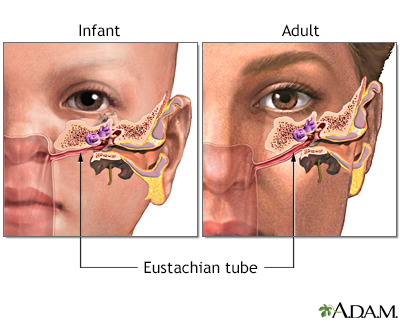
The problem with middle ear infections in children is a combination of size and obstruction: but it has nothing to do with the ear that we see on the side of the head - which Doctors call the outer ear. That the problem appears to lie within the external appendage is compounded by the fact that Doctors look into the Outer ear, in order to view the eardrum and thus confirm their suspicions of a Middle ear infection, which they do when we see a red ear drum bulging with fluid within the Middle ear.
Now the real reason the fluid is trapped within the Middle ear is because the Eustachian tube, that connects the back of the nose with the Inner ear is blocked - usually by the swollen, inflamed membranes of the nasal passages. But most Doctors don't look up the nose of a child because it's already blocked with yellow/green mucous, and so patients often find it difficult to connect the idea that in order to fix the ear, you have to squirt something "up the nose"!
Dr Nsoulis study is another resource to help convince both patients and Doctors that in the case of middle ear problems, where there is a history of allergy, then inhaled nasal steroids are much the better option than repeated doses of antibiotics which, if truth be known, only lead to increased bacterial resistance of pathogens within the rest of the body: and that's not good medicine for anyone!
image
reference
Ampersands & angle brackets need to be encoded.Follow @DrDJsScript
One of the downsides to medicine having access to antibiotics, is that all too often we get to use them ... for the wrong reasons! There is also the trend, covered in a previous blog, for patients to ask for a "really strong" antibiotic, instead of asking for the correct antibiotic!
I was reminded of this when reading about a study from California and recently presented at the American College of Allergy, Asthma & Immunology 2011 Annual Scientific Meeting. In a relatively small study of children with a history of allergy, Dr. Nsouli and colleagues compared the effects of an 14 day course of antibiotics - amoxycillin and clauvulinic acid - with a 14 day course of an aqueous nasal spray containing the steroid Ceclosonide.
Their findings revealed that the Spray worked in 8 days, whereas the antibiotics took 14 days!
The problem with middle ear infections in children is a combination of size and obstruction: but it has nothing to do with the ear that we see on the side of the head - which Doctors call the outer ear. That the problem appears to lie within the external appendage is compounded by the fact that Doctors look into the Outer ear, in order to view the eardrum and thus confirm their suspicions of a Middle ear infection, which they do when we see a red ear drum bulging with fluid within the Middle ear.
Now the real reason the fluid is trapped within the Middle ear is because the Eustachian tube, that connects the back of the nose with the Inner ear is blocked - usually by the swollen, inflamed membranes of the nasal passages. But most Doctors don't look up the nose of a child because it's already blocked with yellow/green mucous, and so patients often find it difficult to connect the idea that in order to fix the ear, you have to squirt something "up the nose"!
Dr Nsoulis study is another resource to help convince both patients and Doctors that in the case of middle ear problems, where there is a history of allergy, then inhaled nasal steroids are much the better option than repeated doses of antibiotics which, if truth be known, only lead to increased bacterial resistance of pathogens within the rest of the body: and that's not good medicine for anyone!
image
reference
Wednesday, November 23, 2011
Another insight into Malignant Melanoma
Tweet
The first patient I ever saw as a medical student was a Dentist in the UK who had terminal, metastatic Melanoma: it wasn't a pretty sight and one that has stayed with me for nearly 40 years! Melanoma is still on the increase and is one of the more common amongst young people: there has been a staggering 50% increase amongst women under the age of 30 since 1980, so any advance in its research and treatment is to be welcome.
Apparently there is a gene called BRAF that is implicated in the spread of Malignant Melanoma, and one of the proteins associated with that gene - P-Rex1 (sounds like a pop group) - is found in higher levels in those with advanced disease. Now scientists have developed a drug that blocks this protein which so far has had beneficial results in experimental models, and has also shown significant survival benefits in human clinical trials.
This is not the end of the story by a long way, but may be the end of the beginning for our understanding where P-Rex1 protein fits into the overall picture, and how Melanoma spreads around the body. From this scientist will be able to develop more targeted treatments so that Melanoma can join all those other cancers that are now in decline, or being managed so much better.
image
reference
Ampersands & angle brackets need to be encoded.Follow @DrDJsScript
The first patient I ever saw as a medical student was a Dentist in the UK who had terminal, metastatic Melanoma: it wasn't a pretty sight and one that has stayed with me for nearly 40 years! Melanoma is still on the increase and is one of the more common amongst young people: there has been a staggering 50% increase amongst women under the age of 30 since 1980, so any advance in its research and treatment is to be welcome.
Apparently there is a gene called BRAF that is implicated in the spread of Malignant Melanoma, and one of the proteins associated with that gene - P-Rex1 (sounds like a pop group) - is found in higher levels in those with advanced disease. Now scientists have developed a drug that blocks this protein which so far has had beneficial results in experimental models, and has also shown significant survival benefits in human clinical trials.
This is not the end of the story by a long way, but may be the end of the beginning for our understanding where P-Rex1 protein fits into the overall picture, and how Melanoma spreads around the body. From this scientist will be able to develop more targeted treatments so that Melanoma can join all those other cancers that are now in decline, or being managed so much better.
image
reference
Tuesday, November 22, 2011
Soft drinks not so kool?
Tweet
Non diet soft drinks have been around for decades in the developed world, and what was once deemed a luxury is now casually bought and consumed, often without any awareness of the action. But dieticians and health workers have been concerned for some time about the current calorie binge in the "West" and in the developing world, and it's connection to the epidemic of worldwide obesity. One element of the excess intake of calories has been the universal availability of high sugar content, carbonated soft drinks, and many health education programs are focused on reducing the consumption of such drinks.
A report out of Boston has raised another possible negative link relating to carbonated soft drinks, and this time it's an increased rate of violence amongst teenagers in those who consume large amounts of such drinks. David Hemenway, MD, professor of public health and director of the Injury Control Center at the Harvard School of Public Health, Boston, Massachusetts, and his colleagues reviewed self reported data from 2725 teenagers (self reported data always makes me a bit dubious about any conclusions drawn from them) in the Boston Youth Study: and his findings are sure to stimulate debate for some time to come.
What they found was that teenagers who consumed more than five 12oz (350mls) of carbonated soft drink per week:
And of concern was the fact that nearly one in three reported that they consumed more than five cans of carbonated drinks per week. Interestingly, the authors did not report a link with obesity.
Soft drinks not only contain carbon dioxide dissolved in water, but they also contain
high fructose corn syrup, aspartame, sodium benzoate, phosphoric or citric acid, and often caffeine, so should the link be confirmed the next question would be "Which one(s) is(are) the culprit(s)"? But we shouldn't jump to the conclusion that soft drinks must be the "root of all evil" and legislate to ban them on the findings of this self reported research. But perhaps we should try to view carbonated soft drinks as something quirky to be tried on occasion, and not the first thing to quench a thirst when walking through the Mall: in many respects, iced-water is a much better choice.
reference
image
Ampersands & angle brackets need to be encoded.Follow @DrDJsScript
Non diet soft drinks have been around for decades in the developed world, and what was once deemed a luxury is now casually bought and consumed, often without any awareness of the action. But dieticians and health workers have been concerned for some time about the current calorie binge in the "West" and in the developing world, and it's connection to the epidemic of worldwide obesity. One element of the excess intake of calories has been the universal availability of high sugar content, carbonated soft drinks, and many health education programs are focused on reducing the consumption of such drinks.
A report out of Boston has raised another possible negative link relating to carbonated soft drinks, and this time it's an increased rate of violence amongst teenagers in those who consume large amounts of such drinks. David Hemenway, MD, professor of public health and director of the Injury Control Center at the Harvard School of Public Health, Boston, Massachusetts, and his colleagues reviewed self reported data from 2725 teenagers (self reported data always makes me a bit dubious about any conclusions drawn from them) in the Boston Youth Study: and his findings are sure to stimulate debate for some time to come.
What they found was that teenagers who consumed more than five 12oz (350mls) of carbonated soft drink per week:
- Were more likely to carry a weapon, and
- Were more likely to be violent towards siblings, dates and friends.
- Were getting insufficient sleep and
- Were using alcohol and tobacco within the past 30 days.
And of concern was the fact that nearly one in three reported that they consumed more than five cans of carbonated drinks per week. Interestingly, the authors did not report a link with obesity.
Soft drinks not only contain carbon dioxide dissolved in water, but they also contain
high fructose corn syrup, aspartame, sodium benzoate, phosphoric or citric acid, and often caffeine, so should the link be confirmed the next question would be "Which one(s) is(are) the culprit(s)"? But we shouldn't jump to the conclusion that soft drinks must be the "root of all evil" and legislate to ban them on the findings of this self reported research. But perhaps we should try to view carbonated soft drinks as something quirky to be tried on occasion, and not the first thing to quench a thirst when walking through the Mall: in many respects, iced-water is a much better choice.
reference
image
Monday, November 21, 2011
Future shock for teenagers?
Tweet
Oh dear! A few years ago there were headlines declaring that the current generation would not live as long as their parents because of premature heart disease. I have to admit that at that the time I thought that there was an element of truth in the statement, but kept my head down when there was a "backlash" suggesting that this was too "emotional" a statement and would be counter-productive.
But it seems that Donald Lloyd-Jones, M.D., chair and associate professor of preventive medicine at Northwestern University Feinberg School of Medicine, has decided to stick his head above the parapet and declare that as far as the current generation of US teenagers is concerned, "The future is bleak"! When it came to the established risk factors for heart disease, none of the 5,547 children profiled in the study fitted the criteria for ideal cardiovascular health: now that seems scarey! But before we think that our teenagers are letting the side down, I vividly remember attending a conference 10 years ago where the lecturer went through the list of cardiovascular risks and asked attendees to keep their hands up if they fitted into each criteria. With each new criteria, more hands went down: and by the end, ther were only one or two hands left up! And these were all Doctors!
But back to the teenagers: their biggest downfall was diet, which appears to be terrible with high sodium and saturated fats. Then approximately a third of them had higher than normal cholesterol, blood sugars and were overweight or frankly obese! Amazingly, considering all the health information regarding tobacco, 25% of them reported that they had smoked in the past month.
The conclusion is not that these teenagers are a lost cause, but rather that we must look at new ways of getting health information through to them so that they can maximize their health and their lives. This is a complex challenge and one that perhaps should start with the idea that the easy option is not always the smartest or best option.
image
reference
Ampersands & angle brackets need to be encoded.Follow @DrDJsScript
Oh dear! A few years ago there were headlines declaring that the current generation would not live as long as their parents because of premature heart disease. I have to admit that at that the time I thought that there was an element of truth in the statement, but kept my head down when there was a "backlash" suggesting that this was too "emotional" a statement and would be counter-productive.
But it seems that Donald Lloyd-Jones, M.D., chair and associate professor of preventive medicine at Northwestern University Feinberg School of Medicine, has decided to stick his head above the parapet and declare that as far as the current generation of US teenagers is concerned, "The future is bleak"! When it came to the established risk factors for heart disease, none of the 5,547 children profiled in the study fitted the criteria for ideal cardiovascular health: now that seems scarey! But before we think that our teenagers are letting the side down, I vividly remember attending a conference 10 years ago where the lecturer went through the list of cardiovascular risks and asked attendees to keep their hands up if they fitted into each criteria. With each new criteria, more hands went down: and by the end, ther were only one or two hands left up! And these were all Doctors!
But back to the teenagers: their biggest downfall was diet, which appears to be terrible with high sodium and saturated fats. Then approximately a third of them had higher than normal cholesterol, blood sugars and were overweight or frankly obese! Amazingly, considering all the health information regarding tobacco, 25% of them reported that they had smoked in the past month.
The conclusion is not that these teenagers are a lost cause, but rather that we must look at new ways of getting health information through to them so that they can maximize their health and their lives. This is a complex challenge and one that perhaps should start with the idea that the easy option is not always the smartest or best option.
image
reference
Sunday, November 20, 2011
Can Cheese affect your Cholesterol?
Tweet
Being one of those people with very few risk factors for heart disease, but who have had stents and also by-pass surgery, I tend to be fairly fanatical about “living the great life” with lots of exercise and fantastic food prepared by the young bride! But there are a few things that I have missed and secretly yearned for over the years, and one of them is Cheese!
Don’t get me wrong: I love what I eat and I never think of it as “healthy” eating, but as awesomely delicious and nutritious food. But there’s something just a little indulgent in say a fine grating of cheese on, perhaps, a sliced zucchini slipped under the grill until it is browned and then eaten whilst still hot!
Well, maybe that little indulgence could become a hope and then a reality because some kind physician at the University of Copenhagen in Denmark has looked at the effects of cheese and butter on Cholesterol levels. The results were that Cheese caused no increase in LDL or total Cholesterol, but with those who consumed the butter had a 7% higher level of LDL. Why there is a difference between cheese and butter is yet to be decided, but it may be to do with Cheese’s relatively high level of Calcium that may affect the excretion of fat by the gut.
But be warned: this does not mean that people with known heart disease should start loading their plated with seven different varieties of Cheese: it just means that once this research has been reviewed and expanded upon, if the Danish findings are confirmed, then that little morsel of Cheese will taste even more delicious.
And finally, just a quick “pat on the back” for our cousins across the ditch - as we in Australia describe New Zealanders! Apparently Kiwi fruit is better at lowering blood pressure than the good old apple a day: so well done guys! The downside is that you have to eat 3 of them a day - and they are pretty “tart” at the best of times! I think I’ll stick to Pomegranate juice!
image
reference
Ampersands & angle brackets need to be encoded.Follow @DrDJsScript
Don’t get me wrong: I love what I eat and I never think of it as “healthy” eating, but as awesomely delicious and nutritious food. But there’s something just a little indulgent in say a fine grating of cheese on, perhaps, a sliced zucchini slipped under the grill until it is browned and then eaten whilst still hot!
Well, maybe that little indulgence could become a hope and then a reality because some kind physician at the University of Copenhagen in Denmark has looked at the effects of cheese and butter on Cholesterol levels. The results were that Cheese caused no increase in LDL or total Cholesterol, but with those who consumed the butter had a 7% higher level of LDL. Why there is a difference between cheese and butter is yet to be decided, but it may be to do with Cheese’s relatively high level of Calcium that may affect the excretion of fat by the gut.
But be warned: this does not mean that people with known heart disease should start loading their plated with seven different varieties of Cheese: it just means that once this research has been reviewed and expanded upon, if the Danish findings are confirmed, then that little morsel of Cheese will taste even more delicious.
And finally, just a quick “pat on the back” for our cousins across the ditch - as we in Australia describe New Zealanders! Apparently Kiwi fruit is better at lowering blood pressure than the good old apple a day: so well done guys! The downside is that you have to eat 3 of them a day - and they are pretty “tart” at the best of times! I think I’ll stick to Pomegranate juice!
image
reference
Saturday, November 19, 2011
Unexpected Hormone supplements?
Tweet
I remember reading a newspaper article back in the '70's about strange events in the fish population of the Great Lakes: apparently the male fish were becoming feminized and it was thought to be due to the increased amounts of Oestrogen flowing into the giant waterway from the urine of women now on the Oral Contraceptive Pill.
This fact returned to me the other day when reading an article which highlighted the possibility of a link between the increased rate of Prostate cancer with the OCP. David Margel, MD, from the Princess Margaret Hospital, University of Toronto, Ontario, Canada reported a demographic study where he and his colleagues found that in areas with the highest use of the OCP, there was an increased rate of Prostate Cancer. He also stressed that this was an "observational" study and no way intended to link the Pill to Prostate cancer, or to suggest that women should come off the Pill: but it does open a window onto an area that is murky to say the least.
There have been many environmental reports over the years on how synthetic organo-chlorines, PCBs and Dioxins have had adverse effects on fish, reptiles and amphibians. Spare a thought for the poor, confused, male Cricket Frogs in Illinois, where 9% of their confreres, instead of having two testicles, have one testicle and one ovary! And 90% of male Tiger frogs had eggs in their testes!
But can synthetic hormones that are found in the OCP find their way into the waterways and cause environmental problems? The answer is yes: but 90% of those synthetic hormones do NOT come from humans, but from cattle! Also, most of the synthetic hormones from humans do get removed from the water supply through current sewage treatment management. The problem is that the largest offenders - cattle - tend not to use toilets and their urine and faeces eventually ends up in the waterways.
Finally, the link to prostate cancer is curious as we commonly use Oestrogens to help suppress the growth of Prostate cancer, so how does this theraputic medicine become a driver of malignancy? These uncertainties should remind us that this latest study is an "Observation", and not meant to point a finger. So, for me, this report is a timely reminder that as we develop these powerful medications to help us fight disease, we should constantly be thinking of what happens to medications and their metabolites, once they have gone through the body - think antibiotics, chemotherapy medications, radioactive tracer dyes used in Radiography and now the latest medical treatments using Nanoparticles - and perhaps even more importantly, that most of these medications will have been used in farm animals for many years before they are released onto humans!
image
resource
Ampersands & angle brackets need to be encoded.Follow @DrDJsScript
I remember reading a newspaper article back in the '70's about strange events in the fish population of the Great Lakes: apparently the male fish were becoming feminized and it was thought to be due to the increased amounts of Oestrogen flowing into the giant waterway from the urine of women now on the Oral Contraceptive Pill.
This fact returned to me the other day when reading an article which highlighted the possibility of a link between the increased rate of Prostate cancer with the OCP. David Margel, MD, from the Princess Margaret Hospital, University of Toronto, Ontario, Canada reported a demographic study where he and his colleagues found that in areas with the highest use of the OCP, there was an increased rate of Prostate Cancer. He also stressed that this was an "observational" study and no way intended to link the Pill to Prostate cancer, or to suggest that women should come off the Pill: but it does open a window onto an area that is murky to say the least.
There have been many environmental reports over the years on how synthetic organo-chlorines, PCBs and Dioxins have had adverse effects on fish, reptiles and amphibians. Spare a thought for the poor, confused, male Cricket Frogs in Illinois, where 9% of their confreres, instead of having two testicles, have one testicle and one ovary! And 90% of male Tiger frogs had eggs in their testes!
But can synthetic hormones that are found in the OCP find their way into the waterways and cause environmental problems? The answer is yes: but 90% of those synthetic hormones do NOT come from humans, but from cattle! Also, most of the synthetic hormones from humans do get removed from the water supply through current sewage treatment management. The problem is that the largest offenders - cattle - tend not to use toilets and their urine and faeces eventually ends up in the waterways.
Finally, the link to prostate cancer is curious as we commonly use Oestrogens to help suppress the growth of Prostate cancer, so how does this theraputic medicine become a driver of malignancy? These uncertainties should remind us that this latest study is an "Observation", and not meant to point a finger. So, for me, this report is a timely reminder that as we develop these powerful medications to help us fight disease, we should constantly be thinking of what happens to medications and their metabolites, once they have gone through the body - think antibiotics, chemotherapy medications, radioactive tracer dyes used in Radiography and now the latest medical treatments using Nanoparticles - and perhaps even more importantly, that most of these medications will have been used in farm animals for many years before they are released onto humans!
image
resource
Subscribe to:
Posts (Atom)