Thursday, December 29, 2011

Poor mother toddler bonding linked to teenage obesity.

I read an article today from Ohio State University which appears to reinforce my belief that the first five years of life are so critical for the normal development of a toddler.

The researchers there looked at the quality of parenting in early life and then looked at the rate of teenage obesity: as you would unhappily expect, those with weak mother-child bonding had a higher rate of obesity - in fact it was over a quarter of them, or 26%. This compared with under 15% for those with observed better bonding skills.

The knee jerk response is then to blame the parents for "causing" their kids to be obese in their later life, with all the associated medical problems that can be associated with it - diabetes, heart disease and some cancers. But the findings highlight the fact that changes must be ocuring in the toddlers brain to account for the metabolic responses to these early life experiences. According to Sarah Anderson, Assistant Professor at Ohio State, “Sensitive parenting increases the likelihood that a child will have a secure pattern of attachment and develop a healthy response to stress. A well-regulated stress response could in turn influence how well children sleep and whether they eat in response to emotional distress – just two factors that affect the likelihood for obesity.”

So instead of just focusing on eating healthy food and getting adequate physical exercise - which is necessary for all children anyway - systems need to be developed to support and improve the parenting skills of those who currently lack them. This is easier said than done and cannot be left solely to government agencies to find solutions. This is something that everyone who knows someone with kids needs to be aware of. Bringing up kids is tough; doing it by yourself is even tougher; doing it in an environment where unemployment is high and making ends meet is a never ending struggle, would just about make a saint weep.

An offer of help, a word of encouragement: maybe even taking the child to the park whilst Mum has a break, or reading stories to the little one whilst she takes "five" - there are many small ways in which we can make a big difference. As Professor Fiona Stanley here in Perth said many years ago, "It takes a village to raise a child".
reference
image
Ampersands & angle brackets need to be encoded.

Tuesday, December 27, 2011

Maintaining the balance in 2012

Here are some figures from the CDC about falls in the over 65yr olds:

  • One out of three adults age 65 and older falls each year,  but less than half talk to their healthcare providers about it.
  • Among older adults (those 65 or older), falls are the leading cause of injury death. They are also the most common cause of nonfatal injuries and hospital admissions for trauma.
  • In 2008, over 19,700 older adults died from unintentional fall injuries.
  • The death rates from falls among older men and women have risen sharply over the past decade.
  • In 2009, 2.2 million nonfatal fall injuries among older adults were treated in emergency departments and more than 581,000 of these patients were hospitalized.
  • In 2000, direct medical costs of falls totaled a little over $US19 billion—$US179 million for fatal falls and $US19 billion for nonfatal fall injuries. This equals $US28.2 billion in 2010 dollars.
In other words, falls are a real issue for everyone, assuming that we all want to live to a ripe old age! But it's not just the elderly that have trouble staying on their feet: here's some information from New South Wales, Australia,


"The total average annual frequency of deaths and hospitalisations respectively, for falls in buildings in Australia were 343 and 105,968 for the period July 2002 – June 2005. The estimated annual cost for these deaths was $250 million, and $1.28 billion for hospital admissions, excluding indirect costs."

So anything that we can do to reduce the trauma caused by "slip ups" is not only saving lives, it's keeping people out of hospital and its saving a fortune. So what can we do?

Staying fit is the first thing to do. Our muscles not only are used for locomotion, but also act as "shock absorbers" when we land - think jumping off a low wall. Without any decent tone or strength in your muscles, doing that small jump could lead to serious injury. One simple way to help improve your leg strength is to find a nice shiny wall or locked door and stand with your back to it: now slowly slide your back down the wall so your knees bend to 90 degrees, and then push back up. If 90 is too far then only go half way: the point is to start within your ability and then to slowly increase the load you put on your legs as the weeks go past. Start with say 5 bends, have a break and then repeat. As the weeks go on, increase the number you do and lower yourself down to 90 degrees (but don't go any lower).

The second thing to do is to work on your balance. Many elderly people have problems with balance and it is wise not only to check with your physician before starting any balance exercises, but also to seek out a physical therapist who can demonstrate them to you in safe physical surroundings. Balance exercises are not rocket science, but they do need to be done away from sharp objects and preferably on a soft surface - just in case! The Mayo Clinic have a simple routine so check out 

http://www.mayoclinic.com/health/balance-exercises/SM00049

Finally, whenever we go out there is a potential to have a fall or a slip: what would you do? Would you put your hands out to break your fall and risk snapping your wrists? Probably the best way to prevent serious injury is to learn to roll as you fall and spread the impact over your trunk and reduce the chance of serious injury: you'll still get a battering and some great bruises, but you might also avoid a life threatening fractured hip. Luckily we live near the beach so that the young bride and I can practice this on the soft sand - it still jars, but it's fun too.

So in 2012, be aware, be strong and stay balanced!  
Ampersands & angle brackets need to be encoded.

Thursday, December 22, 2011

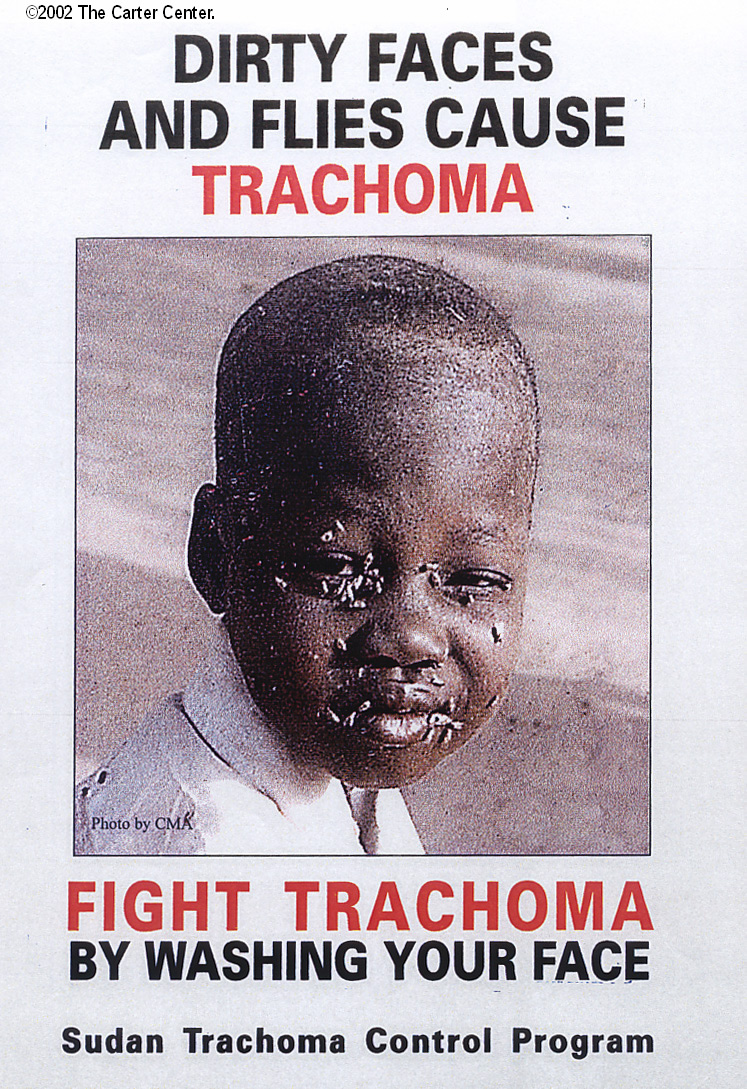
A sight for sore eyes: good news on Trachoma

 Trachoma has been a scourge for centuries and it's effects have been recorded on papyrus in Egypt and even earlier in ancient China. It is unacceptable that in so many countries, including Australia, that sections of those communities are still threatened with blindness caused by this preventable infectious disease.

A report in the MJA 2010 by Taylor et al, concluded that "Blinding endemic trachoma remains a major public health problem in many Aboriginal and Torres Strait Islander communities." This is a disease that we know the causative agent - Chlamydia Trachomatis - and we have an antibiotic that we know works - Azithromycin, and yet there are communities both here in Australia, and around the world where blindness is occurring as a result of this preventable condition.

First some facts:
  • Trachoma is found in Africa, Asia, the Middle East, parts of Latin America and in the Aboriginal and Torres Strait Islanders of Australia.
  •  Worldwide 41 million people are affected by it.
  • 8 million will go blind because of it annually.


The Great News is that things are going to get better!!

Up to the present, prevention programs have been used in affected communities where they administer bi-annual doses of Azithromycin to eradicate Trachoma from those afflicted. Stopping the infections means stopping the resultant deformity of the eyelids, and it's the damaged, scarred eyelids that eventually lead to permanent distortion of the cornea and thence blindness.
Bruce Gaynor MD and his colleagues at the University of California, San Francisco, have just reported in the Lancet, that Azithromycin given once a year is just as effective as when given twice a year: that means current resources can be made to go twice as far.  "We will now be able to reach more people and make the treatment go twice as far as before,” Gaynor said. “This will make a huge impact in slowing down trachoma-related blindness globally.”

All that we need now is for Governments to match the enthusiasm generated by these findings -by increasing their funding, not cutting it - so that a disease that was eradicated in the developed world 100 years ago, can also be eradicated from those communities who most need their sighted citizens.
Ampersands & angle brackets need to be encoded.

Tuesday, December 20, 2011

Our body's "Homeland Security" system

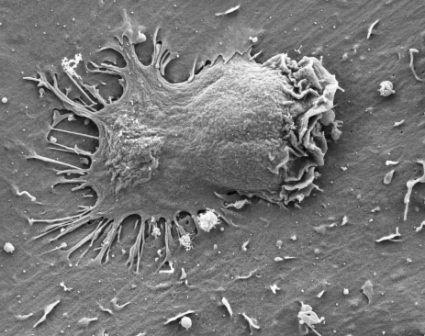
Electron Microscope image of an Effector cell.
The immune system has long fascinated me. We naturally assume that if we get an infection, then our body's immune system will detect and destroy it: but how does it do it? How does the body know that you have an infected ingrown toenail? And how do the body's white cells discover that germs are "down there"; and then how does the white cell "hit squad" travel through the blood stream and find the exact spot where the infection is? And finally, how do these cells get through the blood vessel wall to where the infection is situated? That's a lot of questions, and after reading an article from the Weismann Institute of Science in Israel, I'm blown away by the cleverness of the whole system.

As far as I can work out, this is how it appears to work: a bacteria gets into the system and the first thing to happen is that local inflammation occurs. Specific immune-system cells such as Dendritic cells - think border protection - which wander around looking for interlopers, are switched on by this inflammation and bring genetic information about the bacteria back to the local lymph node. Enter a specialized cell called an Effector Cell - think special forces - which is "trained" by the lymph node nearest the site of inflammation in the subtle art of recognizing this new invading threat. The effector cells then re-enter the blood stream to find the nearest "jump off point" so that they can get close to the site of infection and "terminate" the opposition. But how do they find the right spot to exit the artery whilst hurtling through the blood as it is pumped around the body?

Well according to Prof Ronen Alon and his co-workers Drs Ziv Shulman and Shmuel Cohen, the lining of the blood vessels is not just a passive sticky barrier, but lined by endothelial cells that have the ability to "signal" to passing Effector cells where to exit the system. But what the researchers found was that these chemical signals were held within the endothelial cells  - presumably so they don't get washed away - in structures called vesicles, and that the Effector cells have literally to reach within the endothelial cells to discover that they are at the correct location. What also amazed me was that these defensive white cells have appendages like thin legs and actually crawl along the inside of the blood vessels: and as they crawl along, they "reach inside" the endothelial cells looking for the right chemical signals. It's a bit like driving down the street and stopping at each store to ask where the fire is, when you get to a cluster of stores that say "You're here", then the endothelial cells literally help the Effector cells to pass through "between the buildings" and carry out their mission!


There are still a great many puzzles to answer, but the complexity of the system is only equaled by the beauty of its organization.
image
reference
Ampersands & angle brackets need to be encoded.

Sunday, December 18, 2011

A Child is born ..


Being Christmas time there is a great deal of activity happening around the place, with the buying of presents, preparing food and having parties; and in all the fuss and turmoil, one senses that the real meaning of Christmas is being overlooked - apart from the dreaded "canned" carols in all the major malls and shopping centers! Ocassionally one stumbles across a Nativity scene in a large store, and as always, the little children are still fascinated by the strange sight of a baby in a crib surrounded by cattle, sheep and men in funny clothes.

Being born is a miraculous event - what starts off as two cells fusing into one, ends up becoming a living, breathing human being, and all in the space of 9 months. But the passage from conception, to the time when the baby becomes independent and able to forage for itself, is probably the most "dangerous" period in our lives. For Jesus to be born in a "cattle shed" to a young teenager who had no ante-natal care, and who is having her first baby surrounded by men,and not a midwife in sight, would classify as an extremely high risk birth. And to highlight what faced infants born before the time of modern medicine, here's a quote on conditions in a well known country in the mid 18th century:

    "Infants under one year old accounted for a quarter of the total deaths in England and Wales. Half of all of the deaths were infants under five. Sanitation and hygiene were serious problems. Filth or contaminated foods often caused infection. Diarrhea was so common and dangerous that it could cause death in a baby in less than forty-eight hour." Palestine at the time of Christ was a fairly primitive place and under siege, (not much seems to have changed!) so it would be a fair guess to think that similar conditions would have existed in His time.

If Christ were to be born today in an undeveloped country such as Mali, there would still be a one in five chance that He would be dead before the age of 5! Paradoxically, if He were to be born in Egypt or Albania, He would have a one in five chance of being overweight by the time he was five!

Where we are born has a significant impact on our health and longevity, and for many infants on this planet, they have a fairly rugged start in life. Where a child is born is a major factor in predicting its future health, but the family - or lack of - into which that child is born and which nurtures it in those first 5 years, is equally vital. Critical biological imprinting goes on in those vulnerable first five years, and if parents neglect themselves or their child, the result could well be that the child will spend the rest of their life paying the price.

The gift of one child 2,000 years ago gave us all hope: lets make sure that for what remains of the rest of our lives, that we try our best to give every child the best opportunities in those critical first five years.
image
Ampersands & angle brackets need to be encoded.

Thursday, December 15, 2011

Hydrogel hope for scar free burns

As humans, we have a natural fear of fire. Anyone who has burnt himself or herself will instinctively flinch if they get too close to dangerous heat – and with good reason. Burns are one of those traumas where everyone, medical staff included, has an emotional response. Not only is there the pain, both physical as well as mental and emotional to cope with, but there is also the reality of long term hospital treatment and the inevitability of scarring.

Over the past couple of decades, burns management has come into it’s own as a speciality with excellent protocols to fast track severe cases, and wound management aimed at reducing infection and hopefully reducing the scarring too. Technology has been introduced with the aim of restoring skin coverage as quickly as possible, with people such as Prof Fiona Woods here in Perth WA, being an internationally regarded expert in the area of “Spray on Skin”.

Now workers at John Hopkins in America have developed an engineered Hydrogel that could form the basis of an inexpensive burn wound treatment that appears to work better than currently available dressings or clinical therapies. Using mouse studies, they have shown that the jelly like material appeared to regenerate healthy, scar free tissue, which John Harmon, a professor of surgery at John Hopkins described as “Absolutely remarkable. We got complete skin regeneration, which never happens in typical burn wound treatment.”

The Hydrogel was developed with a team of engineers and promotes the early development of new blood vessels in the area under treatment: this leads to regeneration of the more complex structures found in skin such as hair follicles and the exocrine glands that produce oil on the skin.

Although a patent is protecting the gel, the researchers admit to not fully understanding how the gel works. One theory goes that the gel attracts bone stem cells that take up residence in the matrix and morph into the cells required to produce healthy skin. As there are no drugs or growth factors within the Hydrogel, it is possible that it could be classified as a “Device” and thereby get into the healthcare system quicker than if it had to undergo extensive pharmaceutical trials.

Lets hope what’s good for mice is good for humans too!


Ampersands & angle brackets need to be encoded.

Wednesday, December 14, 2011

Keeping an eye on the future


Macular Degeneration (MD) is the leading cause of blindness in Australia with 1 in 7 people over the age of 50 being affected by it. In hard numbers this means that each year there are 17,700 new cases and the frequency of the problem increases as we get older. In the US the numbers are even more startling with over 7 million people suffering from the condition. The experts talk of Dry and Wet forms of the disease with the wet form being more amenable to treatment, and the dry form - the far more common one - having no effective treatment at all.

What we do know about MD is that it's hereditary with a 50% chance of developing in those with a strong family history. We also know that smokers are at three times greater risk of developing MD and may show signs of the condition 10 years earlier than non smokers: but quitting smoking for 20 years reduces the risk to that of the normal population. We might not be able to change our genetics, but we can stop smoking or make sure our children never smoke!

On the microscopic scale, the problem is one of "neuro-inflammation" caused by activation of Microglial cells, inflammatory cells in charge of cleaning up dead and dying material in the eye. Enter Mayo Clinic ophthalmologist Raymond Iezzi, M.D and his colleagues who worked with Nano-engineers to develop a Nano-particle called a Dendimer, that has enabled them to deliver Steroids to the retina and reduce the inflammation. According to Dr Kannan, a collaborator of Dr Iezzi, "The activated Microglia in the degenerating retina appeared to eat the Dendrimer selectively, and retain them for at least a month. The drug is released from the Dendrimer in a sustained fashion inside these cells, offering targeted neuroprotection to the retina."

Predictably, all the work so far has been done on rats, and researchers are not suggesting that this is a cure but offers the prospect of good control. If, as hoped, the results are reproduced in humans, then this will be an enormously relief for everyone who hopes to live beyond the age of 50!
reference
image
Ampersands & angle brackets need to be encoded.