Tweet
I read in the press today that if you take anything from 1 to 100 sleeping tablets in any one year, then there is a 3.6 times greater risk of death and a higher risk of cancer. Scarey stuff!
For all my medical career I have been adverse to the use of sleeping tablets as no matter what the drug companies may say, there is inevitably some side effect - even for the so called "short acting" ones. I personally remember over 30 years ago taking a flight from Melbourne to the UK for a conference. I took a Barbiturate, which at that time were still the best "sedative" available ... that is until they were banned! I swallowed it shortly after take off and had to be woken in Abu Dabi where we changed planes. A kindly fellow passenger found me wandering around the airport when our connecting flight was called, and directed me to the embarkation area. I resumed sleeping until I arrived in London - some 22 hours after I took the stuff! Probably that's the reason I have always been very wary of using, or prescribing them.
But then there's the other side of the coin.
The aging process brings with it all sorts of degenerative ailments and many of them painful. Aging can also interfere with the normal diurnal sleep pattern in many people especially those with dementing disorders, causing the sufferer to wake in the middle of the night honestly believing that it is the middle of the day. For these people, the use of sedatives in an appropriate fashion combined with their other medication may well be the best chance that they - and their spouses - will get for a decent nights sleep so that they can cope with the following day. The fact that you're 79 with multiple health problems means that you might need to take a sleeping tablet in consultation with your treating physician: and in my book, the increased chance of "death" shouldn't enter the equation of whether its the right thing to do - until we get a better way of treating these conditions!
I am a great fan of preventative health, but I am not a great fan of the Banner Headlines that often accompany them. Medicine has to be adapted to the individual and one size does not fit all.
I hope that has given Editors and journalists something to sleep on!
image
Ampersands & angle brackets need to be encoded.Wednesday, February 29, 2012
Saturday, February 25, 2012
They cost a mint, but are rarely used - Hearing Aids.
Tweet
My dear aged father is staying with us for a few days - he's 91, remarkably spry and just loves to get out and see things. Unfortunately, for many years he has suffered from poor hearing. He dates it to the time he was desveloping anti aircraft missiles designed to shoot down German V2 flying bombs during WWII! Not that it seems to have limited him during his very successful lifetime. He has tried just about every form of hearing aid that has been produced in the last 30 years, and yet as I sit here typing, he's watching the TV and not wearing his hearing "aid" because he "can't hear a damn thing with it".
I remember that some years ago one of his dogs thought his aids were dog biscuits and decided to chew them up - which cost him $2000 to replace! Other aids that he has tried have driven him to distraction trying to remove the batteries with arthritic fingers: and for others he has had to create fine instruments in an attempt to remove the wax that gets plugged in the narrow hearing tube of the aid.
There are three groups of hearing aids, apart from Cochlear implants which have been very successful for the more profoundly deaf, and the different types are described as:
Behind the ear
In the ear
In the canal
.. depending on where the bulk of the mechanism is.
All are designed to augment the ambient noise and transmit it to the ear drum with the intention of improving the persons hearing. But there are a number of problems with this approach as despite the fact that the aids are effective microphones and do make the sound louder, they don't discriminate the incoming sounds; so in a noisy room, the aids make all the noises louder much to the confusion of the hearer. Also, the hearing deficit is not usually caused by a defective ear drum but with with the hearing receptor cells - the hair cells - deep within the ear, which have "worn out". Whilst here has been some exciting work done with using stem cells to grow new hair cells, that promise is well into the future.
With all these problems it is not surprising that of those who need to use hearing aids only 14% of those in the US and 17% of those in France actually use them.
Many of those with hearing deficits have already become fairly good at lip reading, and at least it has the benefit of being free and universally available. There is a massive need to provide cost friendly hearing aids for an aging population, so if any of you have any suggestions on how you have overcome your hearing problems, or things that have worked for you over the years, then please let me know so that I can pass it on to others.
image
Ampersands & angle brackets need to be encoded.Follow @DrDJsScript
I remember that some years ago one of his dogs thought his aids were dog biscuits and decided to chew them up - which cost him $2000 to replace! Other aids that he has tried have driven him to distraction trying to remove the batteries with arthritic fingers: and for others he has had to create fine instruments in an attempt to remove the wax that gets plugged in the narrow hearing tube of the aid.
There are three groups of hearing aids, apart from Cochlear implants which have been very successful for the more profoundly deaf, and the different types are described as:
Behind the ear
In the ear
In the canal
.. depending on where the bulk of the mechanism is.
All are designed to augment the ambient noise and transmit it to the ear drum with the intention of improving the persons hearing. But there are a number of problems with this approach as despite the fact that the aids are effective microphones and do make the sound louder, they don't discriminate the incoming sounds; so in a noisy room, the aids make all the noises louder much to the confusion of the hearer. Also, the hearing deficit is not usually caused by a defective ear drum but with with the hearing receptor cells - the hair cells - deep within the ear, which have "worn out". Whilst here has been some exciting work done with using stem cells to grow new hair cells, that promise is well into the future.
With all these problems it is not surprising that of those who need to use hearing aids only 14% of those in the US and 17% of those in France actually use them.
Many of those with hearing deficits have already become fairly good at lip reading, and at least it has the benefit of being free and universally available. There is a massive need to provide cost friendly hearing aids for an aging population, so if any of you have any suggestions on how you have overcome your hearing problems, or things that have worked for you over the years, then please let me know so that I can pass it on to others.
image
Thursday, February 23, 2012
Time for new tools to screen for heart disease?
Tweet
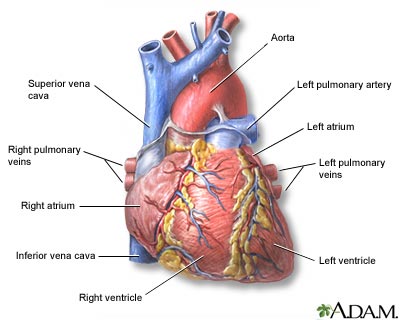
A new study from Nottingham in the UK has suggested that further 5% of people can be picked up for the risk of developing heart disease if the family history is taken by the treating family physician. This is because a patient is more likely to develop Coronary Heart Disease (CHD) if they have a father or brother younger than 55 years who had CHD or a mother or sister younger than 65 with the disease. This has got me thinking about risk factors and heart disease and how "scientific" the whole issue really is. But first up I must stress that I fully endorse current methods of risk factor analysis because it's the best, and only tool that we currently have: but as tools go, they're still fairly primitive!
Blood pressure. A well known "risk" for both heart and vascular disease - think strokes and circulation. The way Docs measure BP hasn't changed since the middle of the 19th century - the equipment has, because for over 100 years the pressure was measured in mms of mercury and its only in the last 20 years that the mercury has been replaced solely because it is an environmental hazard! Blood pressure is measured "indirectly" by inflating a cuff at the midpoint of the biceps muscle until the artery -deep below the muscle - is occluded (blocked off): then one listens (or a microphone does) for the sounds of returning blood flow whilst the pressure in the cuff is reduced. This is not 21st century rocket science! The measurement is supposed to be done with the patient lying down for 5 to 10 minutes and then repeated a few minutes later to confirm: many of the Docs I know have the BP cuff on their patients arm just as the patients are in the act of sitting down - hardly an accurate reflection of what is happening to the heart and blood vessels, if one is going to then prescribe medications for life in order to control "raised" blood pressure.
High Cholesterol: the advent of Statin medications has had a dramatic impact on the management of people with known CHD - it's good stuff. But we still don't know whether the outcomes have been due to lowering LDL (so called bad cholesterol) or to other lifestyle changes. Also, what about the "Good" cholesterol HDL - which in most cases is not affected by taking Statins - how high is protective, and is all Good HDL in fact good HDL? There are still a lot of unanswered questions.
Physical activity: nearly all long term studies rely on patients filling out questionnaires which is noble, but is it accurate?
Smoking: in my book stopping smoking is the best thing anyone can do for their own health -period!
Diet: again, nearly all the information gathered is from patient questionnaires: and what is the impact of having a "night off" from healthy eating to celebrate a wedding or anniversary?
Family History: Why is 55 such a magical number? In my own case I would be deemed low risk as my father had no signs until his mid 70's and my older brother CAD didn't surface until after I was diagnosed in my early 50's.
Then there's flossing teeth, eating walnuts, meditation .. quite an endless list of very "interesting" yet indirect ways of assessing risk.
My point is not to rubbish or reduce the impact of assessing risk for CHD, but a call to arms to find better ways of determining risk. This is a big killer and a big "harmer" and we need to get our best and brightest focused on alternatives to the "dodgy" tools that we currently use. Governments and Heart Foundations should be looking to encourage young researchers to take up the challenge with creative "think-tanks" etc, and perhaps also review their own focus on how they currently spend their "hard earned dollars".
image
Ampersands & angle brackets need to be encoded.Follow @DrDJsScript
Blood pressure. A well known "risk" for both heart and vascular disease - think strokes and circulation. The way Docs measure BP hasn't changed since the middle of the 19th century - the equipment has, because for over 100 years the pressure was measured in mms of mercury and its only in the last 20 years that the mercury has been replaced solely because it is an environmental hazard! Blood pressure is measured "indirectly" by inflating a cuff at the midpoint of the biceps muscle until the artery -deep below the muscle - is occluded (blocked off): then one listens (or a microphone does) for the sounds of returning blood flow whilst the pressure in the cuff is reduced. This is not 21st century rocket science! The measurement is supposed to be done with the patient lying down for 5 to 10 minutes and then repeated a few minutes later to confirm: many of the Docs I know have the BP cuff on their patients arm just as the patients are in the act of sitting down - hardly an accurate reflection of what is happening to the heart and blood vessels, if one is going to then prescribe medications for life in order to control "raised" blood pressure.
High Cholesterol: the advent of Statin medications has had a dramatic impact on the management of people with known CHD - it's good stuff. But we still don't know whether the outcomes have been due to lowering LDL (so called bad cholesterol) or to other lifestyle changes. Also, what about the "Good" cholesterol HDL - which in most cases is not affected by taking Statins - how high is protective, and is all Good HDL in fact good HDL? There are still a lot of unanswered questions.
Physical activity: nearly all long term studies rely on patients filling out questionnaires which is noble, but is it accurate?
Smoking: in my book stopping smoking is the best thing anyone can do for their own health -period!
Diet: again, nearly all the information gathered is from patient questionnaires: and what is the impact of having a "night off" from healthy eating to celebrate a wedding or anniversary?
Family History: Why is 55 such a magical number? In my own case I would be deemed low risk as my father had no signs until his mid 70's and my older brother CAD didn't surface until after I was diagnosed in my early 50's.
Then there's flossing teeth, eating walnuts, meditation .. quite an endless list of very "interesting" yet indirect ways of assessing risk.
My point is not to rubbish or reduce the impact of assessing risk for CHD, but a call to arms to find better ways of determining risk. This is a big killer and a big "harmer" and we need to get our best and brightest focused on alternatives to the "dodgy" tools that we currently use. Governments and Heart Foundations should be looking to encourage young researchers to take up the challenge with creative "think-tanks" etc, and perhaps also review their own focus on how they currently spend their "hard earned dollars".
image
Sunday, February 19, 2012
Gout, nothing to laugh about!
Tweet
I think the best description of the pain caused by gout was the following one: imagine you have put your thumb in a vice and tightened it as far as you can tolerate - then turn the vice handle through another 360 degrees ... that's the sort of pain gout gives you!
Gout is caused by a build up in the body of a chemical called Uric Acid which is a by-product that is produced when protein is broken down. When the levels of uric acid get beyond a certain threshold they can crystalize out in the lining of joints where they cause gout, and in the kidneys where they can form kidney stones.
Symptoms:
In days of yore we talked of Tumor, Dolor, Calor and Rubor - swelling, pain, heat and redness - which are the hallmarks of a gouty joint. Gout tends to strike one joint and the classical site is that of the large joint of the big toe, but it can also affect joints in the hand, wrist, knees, ankles and hip. In the first 24 hours the pain is intense to the point that one of my patients told me that he could feel "the pressure of a shadow" crossing the affected joint! And talking of men, they are more likely to suffer from gout, but in the last few years, studies have suggested that the ladies are catching us up - this must be surely one "race" they would love to lose!
Diagnosis:
Commonly the diagnosis is made on a blood test, but the "gold standard" way of getting the right diagnosis is to aspirate some fluid from the affected joint and see the uric acid crystals under a microscope.
Treatment:
There are two aims of treatment, and the first is
The "get out of goal" treatment which is aimed to stop the suffering caused by an acute attack of gout, and includes NSAIDs for those who can tolerate or take them: steroids by mouth or into the affected joint (when fluid is aspirated for diagnostic purposes - this is done under local anaesthetic and actually gives instant relief): or Colchicine which has been around for almost 100 years now! The standard way of giving Colchicine often led to nausea and diorrhoea, but a newer shortened dosage has overcome some of it's unpleasant side effects, and it is able to rapidly reduce the level of Uric acid in the blood stream.
and the second aim of treatment is
Prevention: where lifestyle factors are important.
Because uric acid comes from the breakdown of protein, one of the triggers for an acute attack can be dieting without exercising. Losing your own body protein can lead to gout, so exercise helps you maintain your muscle bulk whilst losing your body fat.
Cut down on your daily protein intake of meat, fish and fowl.
Alcohol should be avoided
Drink 8 to 10 glasses of water a day to "flush" the system through.
The are medications that block the enzyme responsible for producing uric acid -such as Allopurinol and Febuxostat - and blocking this enzyme is the standard method of preventing a recurrence. However, you need to know that in the first few months of taking such medications, there is an increased chance of suffering an attack of gout, so counter measures need to be taken.
image
Ampersands & angle brackets need to be encoded.Follow @DrDJsScript
Gout is caused by a build up in the body of a chemical called Uric Acid which is a by-product that is produced when protein is broken down. When the levels of uric acid get beyond a certain threshold they can crystalize out in the lining of joints where they cause gout, and in the kidneys where they can form kidney stones.
Symptoms:
In days of yore we talked of Tumor, Dolor, Calor and Rubor - swelling, pain, heat and redness - which are the hallmarks of a gouty joint. Gout tends to strike one joint and the classical site is that of the large joint of the big toe, but it can also affect joints in the hand, wrist, knees, ankles and hip. In the first 24 hours the pain is intense to the point that one of my patients told me that he could feel "the pressure of a shadow" crossing the affected joint! And talking of men, they are more likely to suffer from gout, but in the last few years, studies have suggested that the ladies are catching us up - this must be surely one "race" they would love to lose!
Diagnosis:
Commonly the diagnosis is made on a blood test, but the "gold standard" way of getting the right diagnosis is to aspirate some fluid from the affected joint and see the uric acid crystals under a microscope.
Treatment:
There are two aims of treatment, and the first is
The "get out of goal" treatment which is aimed to stop the suffering caused by an acute attack of gout, and includes NSAIDs for those who can tolerate or take them: steroids by mouth or into the affected joint (when fluid is aspirated for diagnostic purposes - this is done under local anaesthetic and actually gives instant relief): or Colchicine which has been around for almost 100 years now! The standard way of giving Colchicine often led to nausea and diorrhoea, but a newer shortened dosage has overcome some of it's unpleasant side effects, and it is able to rapidly reduce the level of Uric acid in the blood stream.
and the second aim of treatment is
Prevention: where lifestyle factors are important.
Because uric acid comes from the breakdown of protein, one of the triggers for an acute attack can be dieting without exercising. Losing your own body protein can lead to gout, so exercise helps you maintain your muscle bulk whilst losing your body fat.
Cut down on your daily protein intake of meat, fish and fowl.
Alcohol should be avoided
Drink 8 to 10 glasses of water a day to "flush" the system through.
The are medications that block the enzyme responsible for producing uric acid -such as Allopurinol and Febuxostat - and blocking this enzyme is the standard method of preventing a recurrence. However, you need to know that in the first few months of taking such medications, there is an increased chance of suffering an attack of gout, so counter measures need to be taken.
image
Thursday, February 16, 2012
Give sinus infections time - not antibiotics!
Tweet
We're staying in France for 6 months and being from Australia it's been the coldest winter we've experienced for over 35 years - but fun! Despite preparing for the trip by having a flu shot, we did succumb to some rogue virus that entrenched itself in my sinuses and trachea causing a chronic post nasal drip, sinus congestion and a productive cough. Luckily my lungs themselves were not affected.
Sinus infections seem to be one of my Achilles heels (I think that the aging process has revealed that I must be genetically related to centipedes as I appear to be developing more and more heels!) and so dealing with it has become more personal with me.
In a recent edition of the Journal of the American Medical Association, Jay F. Piccirillo, MD, professor of Oto-laryngology at Washington University School of Medicine in St. Louis has shown that taking antibiotics for the vast majority of sinus infections makes no difference after 3 days and gives only a tiny advantage at day 7. "Our results show that antibiotics aren't necessary for a basic sinus infection -- most people get better on their own" he reports.
So what can you do to help with sinus infections?
Being sure of the diagnosis is the first thing to do and that means a trip to a Doctor to make sure that's what you're dealing with. There are several paired sinuses in the front of the skull that drain into the nose through narrow openings, and when the lining of the nose becomes thickened and inflamed by viral infections, then these opening become blocked and the contents of the sinus become sealed in and prone to secondary infection. Most commonly people report local pain over the affected sinus as well as a nasal discharge with symptoms lasting from 7 to 28 days. The key to resolving the problem is to open up the sinuses and let the contents drain. This means using nasal decongestants - appropriately for 3 or 4 days - and simple analgesia to relieve the pain. If the swelling is severe, your Doctor may even prescribe a short course of steroids to reduce the inflammation and open up those sinuses.
But don't put pressure on the Doc to give you antibiotics - according to Jane M. Garbutt, MD the papers first author, "We hope this study provides scientific evidence that doctors can use with patients to explain that an antibiotic is not likely to help an acute sinus infection."!
The message is to be patient and the infection will settle down: if you're worried, then talk to the person who knows more than you on the subject, and that's the guy/lady with the stethoscope!
Reference
image
Ampersands & angle brackets need to be encoded.Follow @DrDJsScript
Sinus infections seem to be one of my Achilles heels (I think that the aging process has revealed that I must be genetically related to centipedes as I appear to be developing more and more heels!) and so dealing with it has become more personal with me.
In a recent edition of the Journal of the American Medical Association, Jay F. Piccirillo, MD, professor of Oto-laryngology at Washington University School of Medicine in St. Louis has shown that taking antibiotics for the vast majority of sinus infections makes no difference after 3 days and gives only a tiny advantage at day 7. "Our results show that antibiotics aren't necessary for a basic sinus infection -- most people get better on their own" he reports.
So what can you do to help with sinus infections?
Being sure of the diagnosis is the first thing to do and that means a trip to a Doctor to make sure that's what you're dealing with. There are several paired sinuses in the front of the skull that drain into the nose through narrow openings, and when the lining of the nose becomes thickened and inflamed by viral infections, then these opening become blocked and the contents of the sinus become sealed in and prone to secondary infection. Most commonly people report local pain over the affected sinus as well as a nasal discharge with symptoms lasting from 7 to 28 days. The key to resolving the problem is to open up the sinuses and let the contents drain. This means using nasal decongestants - appropriately for 3 or 4 days - and simple analgesia to relieve the pain. If the swelling is severe, your Doctor may even prescribe a short course of steroids to reduce the inflammation and open up those sinuses.
But don't put pressure on the Doc to give you antibiotics - according to Jane M. Garbutt, MD the papers first author, "We hope this study provides scientific evidence that doctors can use with patients to explain that an antibiotic is not likely to help an acute sinus infection."!
The message is to be patient and the infection will settle down: if you're worried, then talk to the person who knows more than you on the subject, and that's the guy/lady with the stethoscope!
Reference
image
Monday, February 13, 2012
Keeping your Shoulder moving.
Tweet
A great friend of mine has just had his shoulder replaced because of advanced arthritis to the affected joint. He's a very tough guy, but even he tells me that he's had a very painful post op period. But then that's one of the downsides to shoulder surgery - pain with a capital P - and why is shoulder surgery so painful? One of the reasons maybe that we don't realize how much we use the shoulder to brace the arm when we use our hands, and just turning over in bed at night can be like having a branding iron thrust into the affected shoulder. The good news is that it eventually goes away and you will have a much better functioning shoulder: the not so good news is that it can take up to 6 months to get there!
So why am I sounding negative all of a sudden? Well I'm not really because the focus of treatment should always begin with prevention, and we can do a great deal to reduce the chances of suffering from advanced arthritis of the shoulder.
Firstly posture: most of the work we do each day is "in front of us" which means that the "front muscles" tend to be pretty toned up - think those buffed pectoral muscles. But the ones behind us, between the shoulder blades, tend to get stretched and become weaker, with the result that a great number of people have "Hunched" shoulders, and hunched shoulders mean that the bio-mechanics of the shoulder-moving-muscles become inefficient.
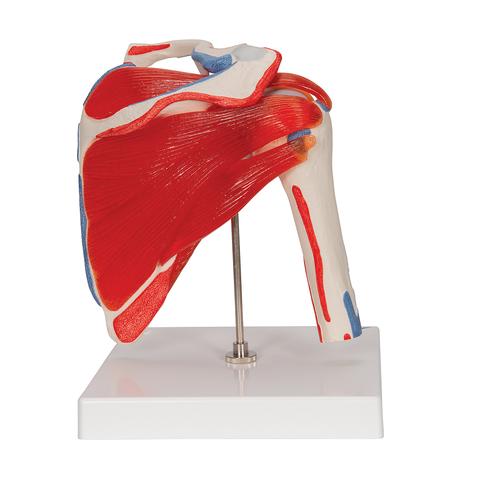
A group of these muscles are known as the Rotator Cuff muscles, and they are four in number, and each of them is attached to the shoulder blade (scapular) at one end. At their other end, their tendons blend with the tough lining that attaches the upper arm (humerus) to the scapular and which is known as the Capsule of the Shoulder joint. When we are young and active we can often damaged these tendons/capsule at sport - swimming, baseball, contact sports etc - and once we go past 40 we can also get a build up of calcium in these damaged tendons/capsule, all of which can lead to inflammation, tendon tears and arthritis.
To reduce the chances of this happening:
1. Maintain good posture - imagine that someone has placed a finger on the crown of your head and you have to gently push up against it. This straightens the spine, pushes out the chest and the shoulders naturally fall back allowing the muscles to act more efficiently.
2. Keep good tone in all your shoulder girdle muscles: there are online physiotherapy sites for these exercises, but my recommendation is always to see your own physical therapist for a personal assessment and individual programs - believe me it's worth it!
3. If you suffer an injury or pain in the shoulder get it assessed early. You can start ice/heat and simple pain killers whilst you wait for your appointment, and if you don't have a medical condition which stops you using anti-inflammatory medications, start them as well (if you're not sure, don't take them).
4. Don't move the shoulder in ways that makes it painful: but if you can move it a little bit in a non painful way, then that's OK.
Shoulder surgery is painful, and a full joint replacement or repair does take time: but with proper rehabilitation during recovery, you will be extremely grateful that you had it done. But if you can avoid it by taking good care of your shoulder earlier on in life, you've just freed up 6 months of great living!
image
Ampersands & angle brackets need to be encoded.Follow @DrDJsScript
So why am I sounding negative all of a sudden? Well I'm not really because the focus of treatment should always begin with prevention, and we can do a great deal to reduce the chances of suffering from advanced arthritis of the shoulder.
Firstly posture: most of the work we do each day is "in front of us" which means that the "front muscles" tend to be pretty toned up - think those buffed pectoral muscles. But the ones behind us, between the shoulder blades, tend to get stretched and become weaker, with the result that a great number of people have "Hunched" shoulders, and hunched shoulders mean that the bio-mechanics of the shoulder-moving-muscles become inefficient.
A group of these muscles are known as the Rotator Cuff muscles, and they are four in number, and each of them is attached to the shoulder blade (scapular) at one end. At their other end, their tendons blend with the tough lining that attaches the upper arm (humerus) to the scapular and which is known as the Capsule of the Shoulder joint. When we are young and active we can often damaged these tendons/capsule at sport - swimming, baseball, contact sports etc - and once we go past 40 we can also get a build up of calcium in these damaged tendons/capsule, all of which can lead to inflammation, tendon tears and arthritis.
To reduce the chances of this happening:
1. Maintain good posture - imagine that someone has placed a finger on the crown of your head and you have to gently push up against it. This straightens the spine, pushes out the chest and the shoulders naturally fall back allowing the muscles to act more efficiently.
2. Keep good tone in all your shoulder girdle muscles: there are online physiotherapy sites for these exercises, but my recommendation is always to see your own physical therapist for a personal assessment and individual programs - believe me it's worth it!
3. If you suffer an injury or pain in the shoulder get it assessed early. You can start ice/heat and simple pain killers whilst you wait for your appointment, and if you don't have a medical condition which stops you using anti-inflammatory medications, start them as well (if you're not sure, don't take them).
4. Don't move the shoulder in ways that makes it painful: but if you can move it a little bit in a non painful way, then that's OK.
Shoulder surgery is painful, and a full joint replacement or repair does take time: but with proper rehabilitation during recovery, you will be extremely grateful that you had it done. But if you can avoid it by taking good care of your shoulder earlier on in life, you've just freed up 6 months of great living!
image
Friday, February 10, 2012
Nanotubes and treating breast cancer.
Tweet
Many years ago I pondered how one day I would cure cancer! The idea I came up with, was I thought, pretty smart. I'd learned somewhere that everything has a natural resonance, and my idea was to introduce a metal into a cancer cell (I thought of using some altered variety of the common cold virus) and then to apply the correct sound from outside the body that would resonate that particular metal. The result would be, to my mind at least, that the individual cells would turn to mush and hey presto, cancer cured.
Like all good, simple ideas, it didn't progress any further, probably because
1. I didn't have the odd $10Million to set up a team and equipment to work on my theory, and
2. I was a humble GP with five very hungry children to feed and
3. It wouldn't have worked anyway
But I was reminded of my idea when I read about how researchers are using muti-walled nanotubes for the treatment of breast cancer. Apparently there are breast cancer stem cells that are particularly resistant to treatment and are thought to be responsible for the spread/metastasis of breast cancer and unfortunatley the usual readiation therapy doesn't work on them.
But the nanotubes, although made of carbon, when exposed to certain laser radiation, heat up and kill the cells they are in. At this stage it appears that the nanotubes are injected directly into cancer tumours, the hope is that they can be "delivered" to individual metastases and then activated. That dream is still a long way off, but then 20 years ago I thought 10 years seemed a long time too.
reference
image
Ampersands & angle brackets need to be encoded.Follow @DrDJsScript
Like all good, simple ideas, it didn't progress any further, probably because
1. I didn't have the odd $10Million to set up a team and equipment to work on my theory, and
2. I was a humble GP with five very hungry children to feed and
3. It wouldn't have worked anyway
But I was reminded of my idea when I read about how researchers are using muti-walled nanotubes for the treatment of breast cancer. Apparently there are breast cancer stem cells that are particularly resistant to treatment and are thought to be responsible for the spread/metastasis of breast cancer and unfortunatley the usual readiation therapy doesn't work on them.
But the nanotubes, although made of carbon, when exposed to certain laser radiation, heat up and kill the cells they are in. At this stage it appears that the nanotubes are injected directly into cancer tumours, the hope is that they can be "delivered" to individual metastases and then activated. That dream is still a long way off, but then 20 years ago I thought 10 years seemed a long time too.
reference
image
Subscribe to:
Posts (Atom)