Tweet
I recently was diagnosed with Coeliac disease which means that anything with Gluten in it causes the lining of my small intestine to get very grumpy and lose it's ability to absorb important nutrients. What this boils down to is avoiding anything with flour, wheat or cereals in it - and this includes bread a beer! Happily for me there hasn't been too much of an alteration in my diet as the Young Bride has me on a fairly strict "leash" anyway when it comes to eating healthy food. But for many, I can see that becoming "Gluten free" could be a big challenge..... but then again on the scale of "things that can go seriously pear shaped", it is a relatively minor issue.
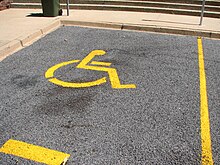
I was reminded of this when we went shopping and as I was waiting for the YB, I sat and observed a large black van parked in the disabled zone with the number plates of "Kiwimagic". At first I thought that some selfish person was incorrectly using the bay when it dawned on me that I knew the person who owned that car and I couldn't think of a more worthy user of the disabled bay than this guy. I literally leaped out of my car to go and find this amazing man, and found him buying fresh meat at the butcher. Well actually, he wasn't doing the buying as he's a Tetra-plegic on a respirator, but his carer and driver was doing his bidding and buying the meat!
My dear Kiwi mate grinned from ear to ear - about the only muscles he can control, and ones that he uses all the time - when recounting how the Wallabies had been "flogged" by his beloved All Blacks at the weekend. He then told me that he had spent 4 weeks traveling around NZ during the Rugby World Cup and as a by-the-by that he had also spent 3 weeks in Intensive Care as a result of a clot whilst touring the "Shaky Isles". When I told him of my experience 3 years ago for 2 days in ICU he winced with genuine care and compassion, such is the generosity of spirit of his humanity.
This is a young man who many years ago was "cleaned up" by a motorist whilst waiting for traffic lights to change: a devastating accident which has left him at the mercy of a mechanical machine and the genuinely tender care of a team of care-givers that he needs 24/7. In the ensuing time he has found time to sponsor an orphanage in Asia, fund sailing adventures for fellow spinal cord victims such as himself, and give inspirational talks to school kids on how to make the most out of the precious gift of life.
For me, this man is a one in a thousand, a man whose powerlessness is his real strength and who has disarmed the world with his smile. When it comes to dealing with our minor adversities, we can all learn from him.
image
Ampersands & angle brackets need to be encoded.
Showing posts with label coeliac disease. Show all posts
Monday, August 27, 2012
Wednesday, August 15, 2012
Coeliac Diseae - a serial problem with Gluten!
Tweet
Coeliac Disease affects about 1 in 250 people in Australia although it is estimated that 75% of those affected are unaware that they have a problem! So is this an alarming health issue or the proverbial storm in a tea cup? The answer, like the condition itself, is still very much a mystery yet to be solved.
Coeliac happens when the body's immune system decides that it doesn't like Gluten - a protein found in wheat barley and rye and all foods that are made from these grains - and as a result damage occurs to the parts of the intestine where these foods are absorbed. As a result of this damage, not only is the absorption of gluten affected but also other important nutrients such as vitamins and minerals. If this damage occurs at an early age, or if diagnosis is delayed for a very long period, then "Mal-absorption" diseases can occur such as Osteoporosis, peripheral nerve damage and liver disease.
Why this sensitivity happens is still not clear: there does appear to be a genetic basis for the problem although not every one with the affected genes actually develops Coeliac disease, and the current thinking is that there are other environmental conditions contributing to the development of the condition.
Many cases of Coeliac are completely silent - in other words, those affected have no symptoms whatsoever: others will suffer from abdominal pain, bloating and diarrhoea too.
Diagnosis is made by biopsy of the affected part of the bowel. This is a relatively simple procedure conducted by a specialist in a hospital setting. Tiny pieces of the bowel are harvested and viewed under a microscope: if present, Coeliac will show itself by a loss of the tiny, hair-like projections covering of the lining of the bowel and which are essential for efficient absorption of nutrients from digested foods.
There is no cure for Coeliac, but like most chronic diseases there is very effective management of the condition that allows for normal health and a normal lifespan. The exciting challenge is to exclude Gluten from ones diet and replace it with other food groups according to the individual tastes of the person with the condition. These days there are a plethora of alternatives to Grain based foods and all food packaging in Australia must show whether the contents contain Gluten.
Also there are many online support groups and organizations:
http://www.coeliac.org.au/
http://www.mayoclinic.com/health/celiac-disease/DS00319
The upside of getting a diagnosis of Coeliac is that you think more carefully about what you eat, and you are challenged to discover different ways of preparing your food: a little bit of what I would call the agony and the ecstacy of living.
If you have any favourite recipes or advice you'd like to send in, I'd be very happy to publish them.
PS there is no gluten in Champagne!
image
Ampersands & angle brackets need to be encoded.Follow @DrDJsScript
Coeliac happens when the body's immune system decides that it doesn't like Gluten - a protein found in wheat barley and rye and all foods that are made from these grains - and as a result damage occurs to the parts of the intestine where these foods are absorbed. As a result of this damage, not only is the absorption of gluten affected but also other important nutrients such as vitamins and minerals. If this damage occurs at an early age, or if diagnosis is delayed for a very long period, then "Mal-absorption" diseases can occur such as Osteoporosis, peripheral nerve damage and liver disease.
Why this sensitivity happens is still not clear: there does appear to be a genetic basis for the problem although not every one with the affected genes actually develops Coeliac disease, and the current thinking is that there are other environmental conditions contributing to the development of the condition.
Many cases of Coeliac are completely silent - in other words, those affected have no symptoms whatsoever: others will suffer from abdominal pain, bloating and diarrhoea too.
Diagnosis is made by biopsy of the affected part of the bowel. This is a relatively simple procedure conducted by a specialist in a hospital setting. Tiny pieces of the bowel are harvested and viewed under a microscope: if present, Coeliac will show itself by a loss of the tiny, hair-like projections covering of the lining of the bowel and which are essential for efficient absorption of nutrients from digested foods.
There is no cure for Coeliac, but like most chronic diseases there is very effective management of the condition that allows for normal health and a normal lifespan. The exciting challenge is to exclude Gluten from ones diet and replace it with other food groups according to the individual tastes of the person with the condition. These days there are a plethora of alternatives to Grain based foods and all food packaging in Australia must show whether the contents contain Gluten.
Also there are many online support groups and organizations:
http://www.coeliac.org.au/
http://www.mayoclinic.com/health/celiac-disease/DS00319
The upside of getting a diagnosis of Coeliac is that you think more carefully about what you eat, and you are challenged to discover different ways of preparing your food: a little bit of what I would call the agony and the ecstacy of living.
If you have any favourite recipes or advice you'd like to send in, I'd be very happy to publish them.
PS there is no gluten in Champagne!
image
Subscribe to:
Posts (Atom)